

Well Water in the Lahontan Valley
Groundwater in the Lahontan Valley around Fallon carries natural arsenic and uranium, and UNR Extension advises owners of domestic wells deeper than 50 feet to test for radioactivity. Water Pros offers free local basic testing for hardness, iron and pH, and we help well owners choose lab tests and treatment, including reverse osmosis.
Key points
- USGS found arsenic and uranium over 100 micrograms per liter across wide areas of shallow Carson Desert groundwater, locally over 1,000.
- Sampling reported by UNR Extension found 11 of 63 domestic wells deeper than 50 feet, or 17 percent, above the alpha radioactivity standard.
- The City of Fallon built a $19 million treatment plant for arsenic to meet an April 2004 compliance deadline.
- Reverse osmosis was effective in preliminary UNR tests.
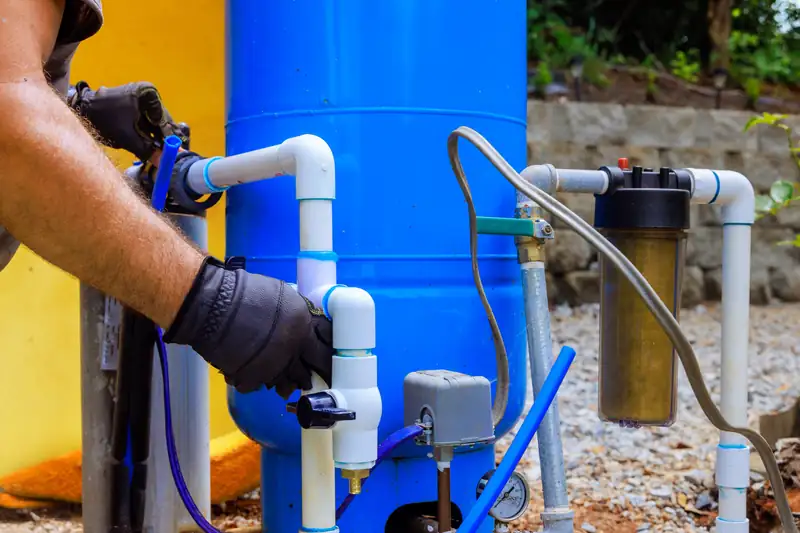
Fallon and the Lahontan Valley have been studied by the U.S. Geological Survey and UNR Extension for decades, and the findings are consistent: the aquifer carries natural minerals that a household well owner should know about. Here is what the studies say and what to do with it.
What is in Lahontan Valley groundwater?
A 1998 U.S. Geological Survey study of shallow ground water in the southern Carson Desert found arsenic and uranium concentrations over 100 micrograms per liter across wide areas, and locally over 1,000. For comparison, the EPA limit for arsenic is 10 micrograms per liter and for uranium is 30 micrograms per liter. These elements dissolve naturally from the valley's sediments, so they show up without any local source of pollution.
Arsenic and uranium have no taste, smell or color. That is why UNR Extension writes that arsenic is commonly found in Churchill County groundwater and why a certified lab test is the way to know a particular well.
Which wells should be tested for radioactivity?
UNR Extension fact sheet FS-11-39 sampled 63 domestic wells deeper than 50 feet in the valley. It found 11 of them, 17 percent, above the alpha standard, and its advice is direct: if your domestic well is deeper than 50 feet, you should test a water sample for radioactivity. The EPA gross alpha limit is 15 picocuries per liter.
When you order a lab panel, ask the lab to include gross alpha, uranium and arsenic along with the routine items. Our guide to how to test well water in Nevada covers choosing a lab and taking the sample.
| What was measured | What the source reported | Source |
|---|---|---|
| Arsenic and uranium, shallow Carson Desert groundwater | Over 100 ug/L across wide areas, locally over 1,000 | USGS, 1998 |
| Domestic wells deeper than 50 ft above the alpha standard | 11 of 63 (17 percent) | UNR Extension FS-11-39, 2011 |
| Raw arsenic at the City of Fallon source | About 100 ppb | EPA case study |
| EPA limits for comparison | Arsenic 10 ug/L, uranium 30 ug/L, gross alpha 15 pCi/L | EPA |
How does the City of Fallon handle it?
The city's answer is a large treatment plant. An EPA case study describes the facility: raw arsenic of about 100 parts per billion is treated by iron coagulation, with a $19 million cost for design, construction and inspection, and the plant was built to meet an April 2004 compliance deadline. That makes the city's own system the model for the kind of attention arsenic needs here.
Homes on a private well do not benefit from that plant, since a well pulls water straight from the ground. Each household treats its own water, which is where a test and a well-chosen system come in. The Fallon page describes the city water side.
Does reverse osmosis work on Lahontan Valley water?
UNR's fact sheet reported that reverse osmosis was effective in preliminary tests, and the USGS has also studied household reverse osmosis systems in the Lahontan Valley. In that study of 59 homes the average arsenic removal was 80.2 percent, though the treated water was not always below 10 parts per billion. The takeaway is practical: reverse osmosis is a strong tool at the kitchen tap, and a retest of the treated water confirms the result.
Our guide on reverse osmosis and arsenic goes deeper. For drinking and cooking, a reverse osmosis system is the common choice, with arsenic filtration available where whole-house treatment makes sense.
What Water Pros does for Lahontan Valley well owners
Our approach is test, then treat. We offer free local basic testing to include hardness, iron and pH. You do not have to be an existing customer. For wells, lab testing is typically required for the health items, and we help you read the report. From there we can design and install what the results call for, including a water softener, filtration and reverse osmosis, and see to maintenance and filter replacement afterward.
We also service most water treatment equipment, even if it was not installed by us. The flat-rate service call fee includes no hourly labor charges and no fuel surcharges, and we will return at no additional charge when more work is needed. Call 775-674-2871, or see well water treatment and the scheduling page.
Sources (5)
- U.S. Geological Survey: USGS (Welch & Lico 1998), arsenic and uranium in shallow groundwater, southern Carson Desert (checked November 2026)
- University of Nevada, Reno Extension: UNR Extension FS-11-39, Radioactivity and groundwater in the Lahontan Valley (checked November 2026)
- U.S. EPA: EPA, Arsenic in Drinking Water Compliance Success Stories: Fallon, NV (c. 2005) (checked November 2026)
- U.S. Geological Survey: usgs.gov/publications/effectiveness-household-reverse-osmosis-systems-a-western-us-region- (checked November 2026)
- U.S. EPA: epa.gov/ground-water-and-drinking-water/national-primary-drinking-water-regulations (checked November 2026)