
SBA Service-Disabled Veteran-Owned Certified

Sulfur Filtration

Water Pros installs and services sulfur filtration that removes hydrogen sulfide, the gas behind a rotten-egg smell in well water. We first find out whether the smell comes from the well or from the water heater, then size the oxidation and filtration to your test.

Few water problems are as obvious as this one. The good news is that hydrogen sulfide is usually an odor problem, not a health one, and it is very treatable.

Sulfur or Sulfate?

They sound alike but behave differently. Hydrogen sulfide is a dissolved gas that smells like rotten eggs. Sulfate is a dissolved mineral with no smell that can taste bitter and have a laxative effect at high levels; that one is covered on our sulfate filtration page. The two are connected: the University of Nevada Cooperative Extension fact sheet notes that sulfate in water can lead to a rotten-egg odor from hydrogen sulfide gas formation.

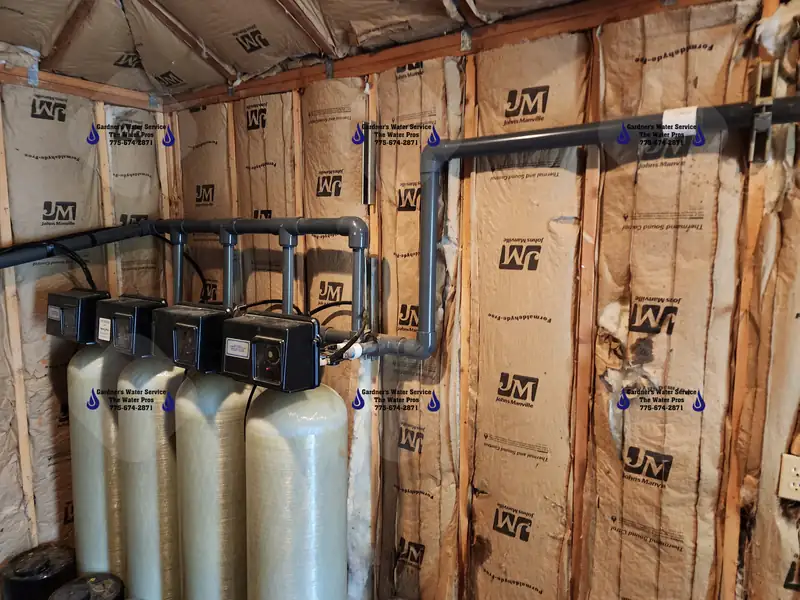
Four treatment tanks plumbed inside an insulated well house

Is the Smell in the Hot Water Only, or Both?

This one question saves a lot of money. Penn State Extension explains that when the smell shows up only in the hot water, the cause is often the water heater: its magnesium anode rod can react with sulfate and produce hydrogen sulfide. Replacing that rod with an aluminum one often ends the smell while keeping corrosion protection.

If the cold water smells too, the gas is coming from the well, and the water needs treatment where it enters the house. Penn State also notes that a softener can occasionally give sulfur-reducing bacteria a place to grow, which is one more reason to look before buying equipment.

  1. Run cold water at a far faucet and smell it
  2. Run hot water at the same faucet and compare
  3. Smell only in hot water: check the water heater anode
  4. Smell in both: test the well and treat at the point of entry

What Hydrogen Sulfide Does to a House

Most people can smell hydrogen sulfide well below 0.5 mg/L, according to Penn State Extension, long before it reaches harmful levels, and there is no drinking water standard for it for that reason. It is still hard on a home: it corrodes metal plumbing, tarnishes silverware and leaves yellow or black greasy stains on fixtures when it forms metal sulfides. When iron is also present, the water can turn dark.

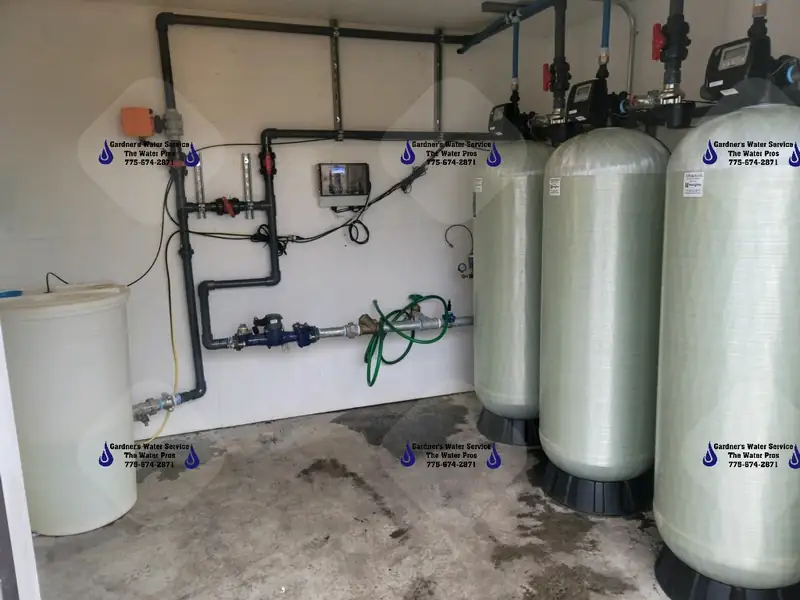
Large treatment tanks with a chemical feed tank

How Sulfur Filtration Works

The common approach is oxidation: convert the dissolved gas into solid sulfur that a filter can catch. Penn State describes three ways to do it.

  • Continuous chlorination: a small feed pump adds chlorine solution ahead of a contact tank, then a filter, and often a carbon filter to take out leftover chlorine. This is where our chlorine injection systems come in.
  • Potassium permanganate feed with greensand: oxidizes and filters in one system, also strong at high levels.
  • Oxidizing filters: manganese greensand recharged with permanganate, for lower to moderate levels. Penn State notes Birm media is not recommended for hydrogen sulfide.

A reverse osmosis system at the sink is not the fix here. A membrane separates dissolved solids, but gases such as hydrogen sulfide can pass through, so the smell is treated at the point of entry first.

Keeping a Sulfur System Working

Oxidation systems need regular attention. For chlorine injection systems we inspect for leaks, confirm proper suction and injection of the chlorine solution and make sure dosing is consistent and accurate. On greensand systems we verify draw and refill from the potassium permanganate tank and clean the injectors at least every 6 months. Any carbon filter after the system is replaced to keep chlorine removal effective.

Start with a well water test that includes hydrogen sulfide, iron and manganese, read rotten egg smell for more troubleshooting, then schedule a visit.

Sulfur Filtration: Questions

Why does my water smell like rotten eggs?

That is hydrogen sulfide gas. It comes either from the well itself or from a reaction inside the water heater. Smelling hot and cold water separately tells you which.

Is hydrogen sulfide in water dangerous?

At the levels found in household water it is mainly an odor and corrosion problem. Penn State Extension notes the nose detects it long before harmful levels. If the smell appears suddenly, test for bacteria too.

Will a reverse osmosis system remove the smell?

Usually not. Hydrogen sulfide is a gas and can pass through the membrane. Treat it at the point of entry with oxidation and filtration.

What is the difference between sulfur and sulfate filtration?

Sulfur filtration removes hydrogen sulfide gas and its smell. Sulfate is a dissolved mineral with no smell that can taste bitter; it is reduced with reverse osmosis or ion exchange.

Why does only my hot water smell?

The water heater's magnesium anode rod can turn sulfate into hydrogen sulfide. Swapping it for an aluminum rod often solves it.

Do you service chlorine injection systems?

Yes. We inspect for leaks, confirm suction and injection and check that dosing is accurate, even on systems we did not install.

More questions and answers

What customers say about our sulfur and odor work

4.9 on Google from 55 reviews

Lisa Ryan

Posted on Google

Both Chris and Crystal are wonderful to work with, and have made new Well ownership a breeze. I love how knowledgeable they both are about their craft, and how enthusiastic they are about sharing that knowledge with me. Chris went above and beyond to help us get set up with Reverse Osmosis and a whole house filter. We no longer smell sulfur or see rust spots, we don’t have to be concerned with our littles ingesting arsenic, and my skin and hair has never felt better! For anyone needing any sort of water filtration needs, I highly recommend Water Pros.

Response from the owner

Thank you so much for the thoughtful review and recommendation. We’re so happy we could help make well ownership easier and give your family peace of mind with safe, clean water. It means a lot to hear the improvements you’ve noticed, and we truly appreciate your trust and support.

J and R Miller

Posted on Google

We have been using Gardner’s Water Service for 4+ years- ever since we built our house which uses well water. I am very picky about the taste (and smell) of my water and Gardner’s made it all Great! They will call to remind me it’s time to make a maintenance appointment. They have always been on time for the appts. And Bill always explains what (and why) he’s done to our system for maintenance.

I definitely recommend Gardner’s to make a new water conditioning system or for up-grading or maintenance of one.

Response from the owner

Thank you so much J & R. We greatly appreciate your feedback! Thank you for your continued support!

Elizabeth Brown

Posted on Google

Got my new water system yesterday, the water is so much better, no smell and already see a difference in my dry skin. Chris was fantastic, very professional, friendly and explained everything very well. Thank you...

Response from the owner

Thank you Elizabeth for giving us the opportunity to help with your water needs. We appreciate your feedback & your business. Thanks again!

Offering you the quality Water Treatment Services you deserve!

Free local basic testing to include hardness, iron & pH. Service on most water treatment systems, even ones we did not install.

or call 775-674-2871

★★★★★ 4.9 on Google from 55 reviews

Monday - Friday - 8am to 4:30pm

Get in Touch