

Arsenic in Nevada Well Water
Arsenic occurs naturally in Nevada groundwater, and a Desert Research Institute study found 22 percent of 174 sampled domestic wells above the federal limit of 10 micrograms per liter. It cannot be seen, tasted or smelled, so a certified lab test is how you know, and we install and service the filtration that brings it down.
Key points
- USGS statewide sampling ranged from under 1.6 to 2,408 micrograms per liter in 190 samples taken 2007 to 2021.
- The federal limit is 10 micrograms per liter (10 ppb).
- Several Northern Nevada water systems treat for arsenic, which shows how common it is.
- Test, then choose between a whole-house arsenic system and reverse osmosis at the tap.
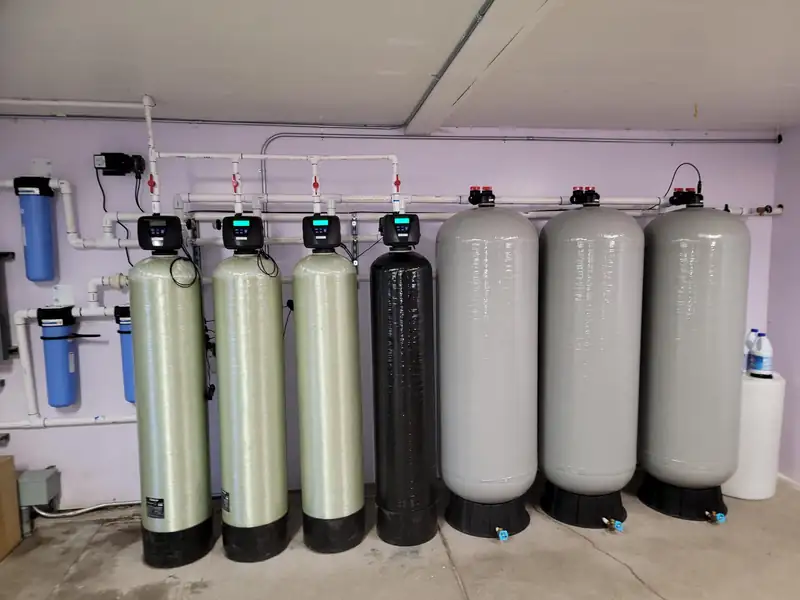
If you are on a private well in Northern Nevada, arsenic is the one test you should not skip. It comes from the rock and sediment the water moves through, not from anything you did, and the amounts vary a lot from one well to the next.
How common is arsenic in Nevada wells?
Common enough that studies keep finding it. The U.S. Geological Survey's Nevada Water Science Center reports arsenic in statewide groundwater from less than 1.6 to 2,408 micrograms per liter across 190 samples collected from 2007 to 2021. A separate Desert Research Institute study, summarized in 2022, tested 174 domestic wells, mostly around Reno, Carson City and Fallon, and found 22 percent above the arsenic limit.
The same study found that only 41 percent of the homes had any treatment, and in some of those homes the treated water still tested above the limit. That detail matters: owning a filter is not the same as knowing it works, which is why we recommend a lab test of the treated water after installation.
What is the arsenic standard and how do you read it?
The EPA's maximum contaminant level for arsenic is 0.010 milligrams per liter, which is 10 parts per billion or 10 micrograms per liter. It has applied since January 2006. Utilities are judged on a running average of many samples, while a private well gets a single snapshot, so a result near 10 is a reason to retest.
Our guide on reading a water test report explains the units. The USGS Carson Valley study of 2024 is a good example of why trends matter: arsenic was above 5 micrograms per liter in most Johnson Lane samples, and often above 10 in the sampled wells there.
How do Nevada towns deal with arsenic?
Looking at what public systems built tells the story. Fallon's raw water from its basalt aquifer runs around 100 parts per billion, and the city built a $19 million treatment plant to meet an April 2004 compliance deadline, as the EPA documented in a case study. Fernley completed an arsenic microfiltration plant in 2009. Silver Springs Mutual Water treats two of its wells with ferric chloride coagulation and multimedia filtration.
Those are municipal plants serving thousands of homes. A private well owner gets the same kind of result at household scale with a point-of-entry filter or a tap-level system, and the choice depends on your test results.
| Place | What public records show |
|---|---|
| Fallon | Raw basalt-aquifer water near 100 ppb; treatment plant online 2004 |
| Fernley | Arsenic microfiltration plant completed 2009 |
| Silver Springs | Two wells treated with ferric chloride and multimedia filtration |
| Carson Valley (Johnson Lane) | Arsenic over 5 ug/L in most USGS 2024 samples |
How do you remove arsenic from well water?
The right method depends on the form of arsenic in your water and on iron, which helps arsenic filters work, so the lab report comes first. We offer arsenic filtration that treats the whole house, and reverse osmosis that treats the water you drink and cook with at the kitchen tap. Many homes use both approaches together depending on the numbers.
If you are weighing the options, read our answer on whether reverse osmosis removes arsenic. Whichever system you choose, test the treated water afterward, and we can set up a maintenance plan so the media or membranes are replaced on schedule.
What Water Pros does about arsenic
Start with the lab test. Ask a Nevada-certified lab for a panel that includes arsenic; our well testing guide shows which panel to order. Our free local basic testing for hardness, iron and pH adds useful context because iron affects which arsenic system fits.
With results in hand we explain the options in plain words, install the system, and service it later, even if it was not installed by us. Our water testing and well water treatment pages describe the process. You don't have to be an existing customer.
Sources (7)
- U.S. Geological Survey: usgs.gov/centers/nevada-water-science-center/science/arsenic-nevada-groundwater (checked November 2026)
- Phys.org: phys.org/news/2022-10-elevated-arsenic-metals-nevada-private.html (checked November 2026)
- U.S. EPA: EPA, Arsenic in Drinking Water Compliance Success Stories: Fallon, NV (c. 2005) (checked November 2026)
- fernleyreporter.com: Fernley Reporter, council approves water treatment plant repairs, 8/15/2025 (checked November 2026)
- Nevada Division of Water Resources: Silver Springs Mutual Water Co. Water Conservation Plan, approved 10/21/2025 (checked November 2026)
- U.S. Geological Survey: USGS OFR 2024-1045 (Naranjo & Bubiy), water levels, nitrate and arsenic, Carson Valley (checked November 2026)
- U.S. EPA: epa.gov/ground-water-and-drinking-water/national-primary-drinking-water-regulations (checked November 2026)