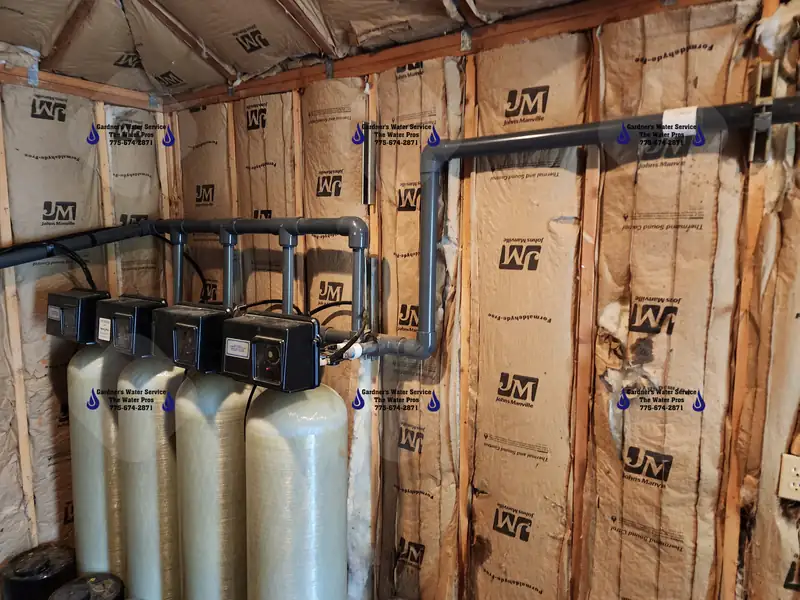
A rotten egg smell almost always comes from hydrogen sulfide gas in the water. If you only smell it on the hot side, the water heater is the likely source; if hot and cold both smell, the gas is coming from the well or the water supply.
Hydrogen Sulfide Is Not the Same as Sulfate
Two different things get called "sulfur water." Hydrogen sulfide is a dissolved gas, and it is what you smell. Penn State Extension notes that most people can detect it at levels well below 0.5 milligrams per liter, long before it is a health concern. It can also tarnish metal and leave yellow or black greasy stains on fixtures.
Sulfate is a dissolved mineral with no rotten egg smell of its own. At high levels it can give water a bitter taste, and the EPA's secondary guideline for sulfate is 250 milligrams per liter. The two are related: bacteria and some chemical reactions can turn sulfate into hydrogen sulfide, which is why a well can test high for sulfate and still have a smell problem only in certain places. Our sulfate filtration page covers the mineral; this page is about the smell.
Hot Water Only, or Hot and Cold?
Run the cold tap in a bathroom for a minute, then the hot tap, and smell each one in a glass. That one check sorts most cases.
Hot water only: the water heater is the likely source. Penn State Extension explains that heaters carry a magnesium rod to slow corrosion, and that rod can chemically reduce sulfates in the water to hydrogen sulfide.
Hot and cold, every tap: the gas is in the water before it reaches the house, which on a private well means the aquifer or bacteria in the well.
Only one faucet or only when water sits: a drain or a little-used line may be the culprit rather than the water itself.
Well Water Versus City Water
Hydrogen sulfide is mainly a private well problem, where the water reaches the house without treatment. Public systems in Northern Nevada disinfect with chlorine, so a sulfur smell on city water is less common; when it happens, start with the water heater check above.
On a well, the smell can come and go with the season or with how hard the well is pumped. That variability is one more reason we recommend a full water analysis every 3 to 5 years on a private well.
Test First, Then Treat
Treatment depends on how much hydrogen sulfide is present and what else is in the water, especially iron and manganese, which often travel with it. Our free local basic test covers hardness, iron and pH, and those numbers decide which equipment can work. A lab can measure sulfide and sulfate if the smell is strong or the source is unclear. If there is any chance sewage is involved, ask the lab for a bacteria test too.
How Rotten Egg Water Gets Treated
Penn State Extension describes the standard options, and they match what we install and service:
Oxidation with chlorine injection. A small feed pump adds chlorine, a holding tank gives it time to convert the gas to particles, and a filter catches them. Penn State suggests at least 20 minutes of contact time, often followed by a carbon filter to take out leftover chlorine. See chlorine injection systems.
Oxidizing filter media. Systems that use air or potassium permanganate, like the greensand filters on our sulfur filtration page, oxidize and filter the gas along with iron.
Activated carbon. For a light smell, below about 1.0 milligram per liter by Penn State's figure, a carbon filter may be enough. See carbon filtration.
Water heater fixes. When only the hot side smells, the answer is in the heater rather than a whole-house system. Check with your water heater's maker before changing anything inside it.
One thing that will not solve it: reverse osmosis. RO is excellent for dissolved solids at the kitchen sink, but dissolved gases such as hydrogen sulfide can pass through the membrane, so the smell has to be handled before the water reaches it.
Every one of these systems needs upkeep to keep working. Chlorine tanks need refilling, injectors need cleaning and media needs regenerating, all of which are part of our system maintenance visits.
Rotten Egg Smell in Your Water: Questions
Is water that smells like rotten eggs safe to drink?
Hydrogen sulfide is a nuisance at the levels found in most wells, and the nose picks it up long before it is harmful. Because the smell can rarely point to sewage, have the water tested for bacteria if you are not sure of the source.
Why does only my hot water smell?
The magnesium rod in many water heaters can turn sulfate in the water into hydrogen sulfide. If the cold side is clean, look at the heater before treating the whole house.
Will a water softener remove the smell?
A softener is built for hardness, not for dissolved gas. A rotten egg smell needs oxidation, an oxidizing filter or carbon, chosen after a test.
Does reverse osmosis remove sulfur smell?
No. Dissolved gases like hydrogen sulfide can pass through an RO membrane, so the smell has to be treated before the water reaches the RO unit.
Can you fix a sulfur system someone else installed?
Yes. We service most water treatment equipment, even systems we did not install. Photos or model details help us arrive prepared.
Both Chris and Crystal are wonderful to work with, and have made new Well ownership a breeze. I love how knowledgeable they both are about their craft, and how enthusiastic they are about sharing that knowledge with me. Chris went above and beyond to help us get set up with Reverse Osmosis and a whole house filter. We no longer smell sulfur or see rust spots, we don’t have to be concerned with our littles ingesting arsenic, and my skin and hair has never felt better! For anyone needing any sort of water filtration needs, I highly recommend Water Pros.
Response from the owner
Thank you so much for the thoughtful review and recommendation. We’re so happy we could help make well ownership easier and give your family peace of mind with safe, clean water. It means a lot to hear the improvements you’ve noticed, and we truly appreciate your trust and support.
J
J and R Miller
Posted on Google
We have been using Gardner’s Water Service for 4+ years- ever since we built our house which uses well water. I am very picky about the taste (and smell) of my water and Gardner’s made it all Great! They will call to remind me it’s time to make a maintenance appointment. They have always been on time for the appts. And Bill always explains what (and why) he’s done to our system for maintenance.
I definitely recommend Gardner’s to make a new water conditioning system or for up-grading or maintenance of one.
Response from the owner
Thank you so much J & R. We greatly appreciate your feedback! Thank you for your continued support!
E
Elizabeth Brown
Posted on Google
Got my new water system yesterday, the water is so much better, no smell and already see a difference in my dry skin. Chris was fantastic, very professional, friendly and explained everything very well. Thank you...
Response from the owner
Thank you Elizabeth for giving us the opportunity to help with your water needs. We appreciate your feedback & your business. Thanks again!
We use cookies to run the site and to see which pages help people. Choose Essential only to turn off analytics. We never sell your data. Privacy policy