

Uranium in Nevada Well Water
Uranium is a naturally occurring mineral in Nevada rock and groundwater, and the federal drinking water limit is 30 micrograms per liter. A lab test tells you where your well stands, and when treatment is needed we install the filtration and reverse osmosis systems that address it.
Key points
- EPA limit: 30 micrograms per liter.
- A Desert Research Institute study found uranium above guidelines in 8 percent of sampled homes.
- Utilities are judged on running averages, so one high sample is not the whole picture.
- UNR Extension advises testing wells deeper than 50 feet for radioactivity in the Lahontan Valley.
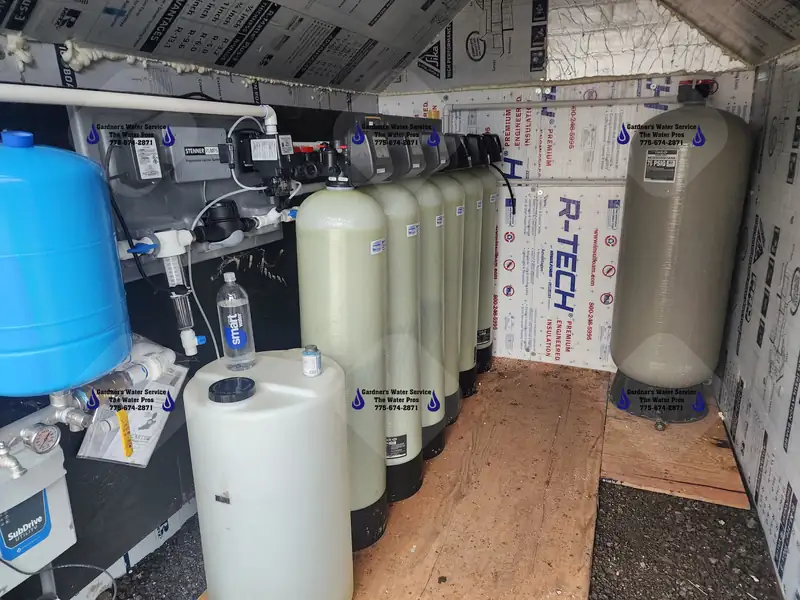
Uranium sounds alarming, but in Northern Nevada it is simply part of the geology. Granite and volcanic rock release small amounts into groundwater. The practical questions are how much your well has and what to do if the number is high.
What is the uranium limit and how common is it?
The EPA sets the maximum contaminant level for uranium at 30 micrograms per liter. The Desert Research Institute study of private wells, reported in 2022, found uranium above guidelines in 8 percent of the homes sampled, along with arsenic and iron. A news report on the same research noted one well sample at 147 parts per billion, which shows how wide the range between wells can be.
Because uranium has no color, taste or smell, it shows up only on a lab panel. Ask the lab to include it, since a routine panel may not.
What do Nevada water systems report?
Public reports give a useful picture of how uranium looks in practice, and they also show how compliance works. Carson City's annual report lists a uranium average of 19.52 parts per billion, with a maximum of 61 at one source; compliance is based on the running average, which stayed below the limit. The City of Elko's 2023 report lists uranium at 25.8 against the limit of 30. In Yerington, the California Well (#7) tested at 0.037 milligrams per liter on September 11, 2023, was taken offline, and has been on quarterly testing since.
Our conversion helps with that last one: 0.037 mg/L is 37 micrograms per liter. The takeaway is that a single reading above the limit triggers a retest and a plan, which is the same approach we suggest for a private well.
| Place and year | Uranium result | Limit |
|---|---|---|
| Carson City (annual report) | Average 19.52 ppb; maximum 61 ppb at one source | 30 ug/L |
| Elko 2023 | 25.8 | 30 ug/L |
| Yerington California Well (#7), 9/11/2023 | 0.037 mg/L (37 ug/L, our conversion) | 30 ug/L |
When should a well owner test for uranium?
Test once when you move in or after drilling, and add it to your lab panel whenever you retest broadly. UNR Extension's Lahontan Valley guidance says owners of domestic wells deeper than 50 feet should test for radioactivity, which includes uranium. Wells that have been deepened, or that sit in areas with declining water levels, are worth checking again, because water chemistry can shift with depth.
Our guide to testing well water in Nevada covers the panel, the sample and the lab list. Bring the results to us if you would like help reading them.
A repeat test is also sensible if your first panel was taken years ago. Groundwater is not fixed, and a fresh result gives you a current starting point for any treatment decision. Keep each report in one folder so you can compare the numbers side by side over time.
How do you reduce uranium in drinking water?
Treatment is chosen from the numbers on your report. Reverse osmosis at the kitchen tap treats the water you drink and cook with, and it is the most common approach for a household with a result above the limit. For a whole-house approach, our well water treatment team looks at the full picture, including iron, hardness and pH, which affect how any filter performs.
After installation, a lab test of the treated water shows the before and after on paper. Reverse osmosis membranes and pre-filters need replacing on a schedule, and our system maintenance plans handle that.
What Water Pros does about uranium
We start with a lab test, because certified lab results are what tell you where you stand. Our free local basic testing for hardness, iron and pH is a good first step, and you don't have to be an existing customer. If the lab report shows uranium near or above 30 micrograms per liter, we explain the options, install the right system, and service it for years to come, even if it was not installed by us.
Our water testing page shows how the two steps fit together.
Sources (6)
- U.S. EPA: epa.gov/ground-water-and-drinking-water/national-primary-drinking-water-regulations (checked November 2026)
- Carson City: Carson City 2026 Water Quality Report (2025 data) - loads in a browser only (403 to scripts) (checked November 2026)
- 2news.com: KTVN 2News, Yerington well exceeds uranium standard, 11/3/2023 (checked November 2026)
- cms4files.revize.com: City of Elko 2023 Water Quality Report (checked November 2026)
- Phys.org: phys.org/news/2022-10-elevated-arsenic-metals-nevada-private.html (checked November 2026)
- University of Nevada, Reno Extension: UNR Extension FS-11-39, Radioactivity and groundwater in the Lahontan Valley (checked November 2026)