
Metallic or Bitter Taste
A metallic taste usually points to iron, manganese or copper, a bitter taste to sulfate or low pH, and a salty taste to chloride or dissolved solids. We start with a free local basic test, then fit the treatment, often reverse osmosis at the kitchen tap or a filter for the whole house.
What Each Taste Usually Means
The EPA publishes secondary guidelines for the things that change how water tastes and looks. These are not health limits. They mark the level where most people start to notice.
| Taste | Usual suspect | EPA guideline |
|---|---|---|
| Metallic, like a coin or blood | Iron | 0.3 mg/L |
| Metallic or bitter, sometimes with dark stains | Manganese | 0.05 mg/L |
| Metallic or bitter after water sits in pipes | Copper from plumbing | 1.3 mg/L action level |
| Bitter, sometimes with a laxative effect on newcomers | Sulfate | 250 mg/L |
| Salty | Chloride | 250 mg/L |
| Flat, mineral or salty overall | Total dissolved solids (TDS) | 500 mg/L |
Taste is a clue, not a diagnosis. Two waters can taste alike for different reasons, which is why we measure first.
City Water vs Well
Public systems publish a yearly water quality report, and the numbers show why taste differs from town to town. The City of Elko's 2023 report lists total dissolved solids of 365 to 1,050 milligrams per liter and notes hardness, deposits, staining and salty taste among the effects of dissolved minerals. The City of Winnemucca's 2025 report lists total dissolved solids of 280 to 860 and sodium up to 78. Those are utility-published figures, and compliance with drinking water standards is judged on the system's overall results.
On a private well nothing has been blended or treated before it reaches your tap, so the water carries whatever the aquifer holds. Iron, manganese, sulfate and dissolved solids are common in Northern Nevada wells. Our well water treatment page describes how we approach them as a package.
Test Before Treating
Our free local basic testing includes hardness, iron and pH, and you do not have to be an existing customer. For a taste complaint that is often enough to separate iron or pH issues from the rest. If the test does not explain the taste, a certified lab can measure TDS, chloride, sulfate and metals. For wells, lab testing is typically required anyway, and our well water testing page explains what to ask for.
A quick check at home helps too. Taste the cold tap first thing in the morning, then after running it for two minutes. If the taste fades, metal from your own plumbing is a likely contributor. If it stays the same, look to the supply.
Fixes: RO, Iron Filtration, pH
Once we know the cause, the fix is usually one of these:
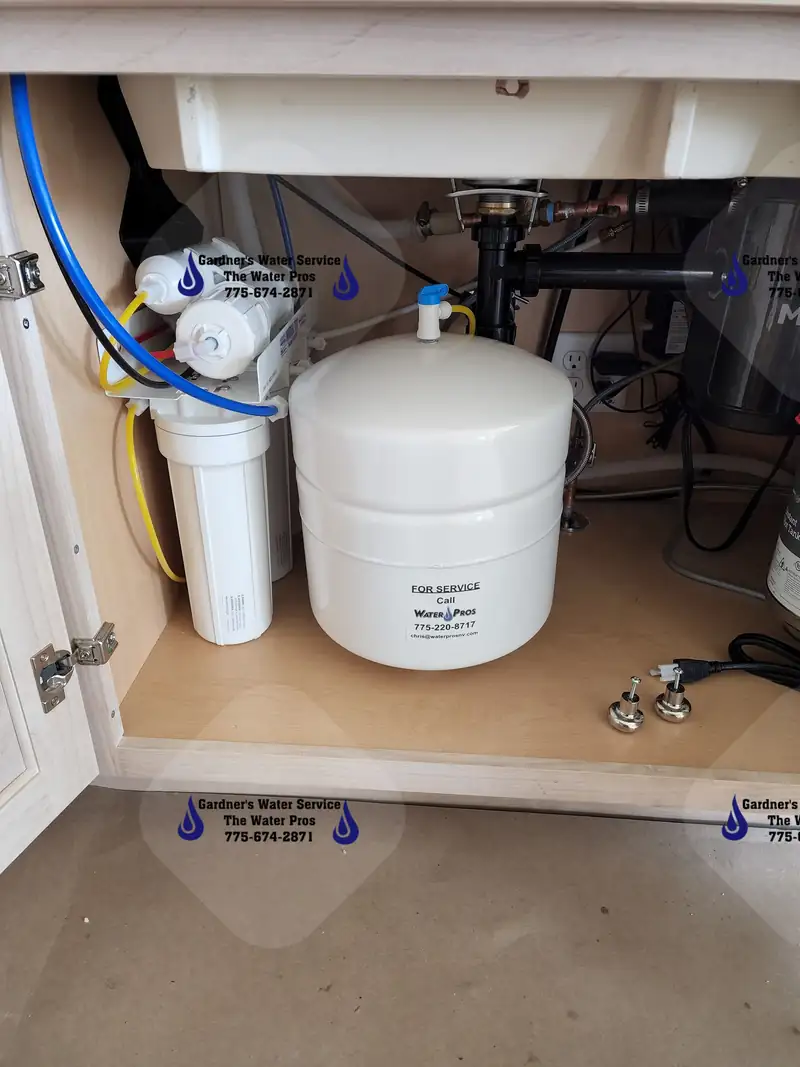
- Reverse osmosis for drinking water. RO reduces dissolved solids, which is where salty, flat and mineral tastes come from. We check the membrane with a TDS test at service. See reverse osmosis systems and TDS filtration.
- Iron or manganese removal. When the metallic taste comes from the metals themselves, a whole-house system treats the water at the source. See iron filtration.
- pH adjustment. Acidic water can pull metals from plumbing and taste sharp. An acid neutralizer brings the pH up. See pH adjustment.
- Carbon filtration. For chlorine and other taste and odor issues, a carbon filter polishes the water. See carbon filters.
We also service RO units and filters that someone else installed, so a system that has lost its edge can often be brought back with new filters and a membrane check.
Metallic or Bitter Taste: Questions
Why does my water taste like metal?
Iron, manganese or copper are the usual reasons. The EPA guidelines are 0.3 milligrams per liter for iron and 0.05 for manganese, and copper has a 1.3 action level. A test tells us which one it is.
Why does my water taste salty?
Chloride or a high level of dissolved solids is usually behind it. The EPA guideline is 250 milligrams per liter for chloride and 500 for total dissolved solids.
Does reverse osmosis fix the taste?
RO reduces dissolved solids at the kitchen tap, which improves salty, mineral and bitter tastes. For metals or odor in the whole house, we pair it with other filtration based on your test.
Does the taste mean my water is unsafe?
The secondary guidelines cover taste, color and staining, not health. If you want to know what is in your water, a certified lab test is how to know.
Is the free test enough for a taste complaint?
It covers hardness, iron and pH, which explains many cases. If it does not, we point you to a lab panel for the rest.
Sources (5)
- U.S. EPA: epa.gov/sdwa/secondary-drinking-water-standards-guidance-nuisance-chemicals (checked November 2026)
- U.S. EPA: epa.gov/ground-water-and-drinking-water/national-primary-drinking-water-regulations (checked November 2026)
- cms4files.revize.com: City of Elko 2023 Water Quality Report (checked November 2026)
- cdn.myocv.com: City of Winnemucca 2025 CCR (checked November 2026)
- waterprosnv.com: Water Pros: Reverse Osmosis Systems (checked November 2026)
Offering you the quality Water Treatment Services you deserve!
Free local basic testing to include hardness, iron & pH. Service on most water treatment systems, even ones we did not install.
or call 775-674-2871
★★★★★ 4.9 on Google from 55 reviews
Monday - Friday - 8am to 4:30pm