
White Spots and Scale
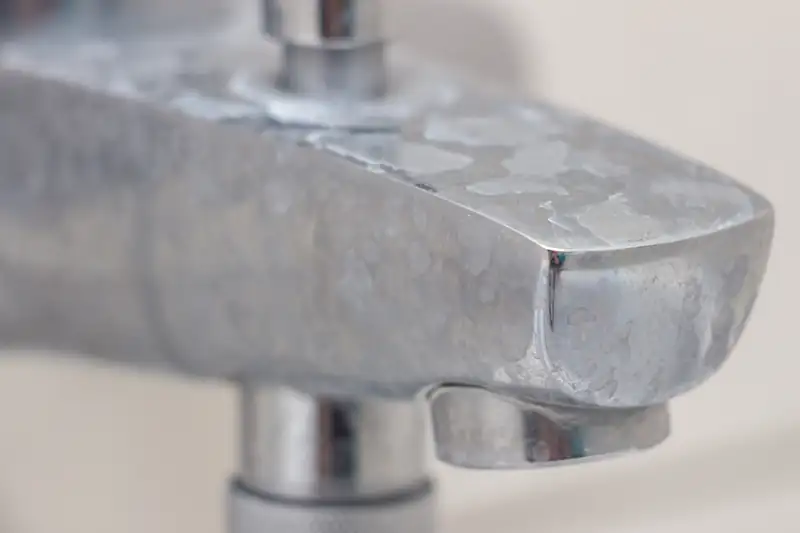
White spots, chalky crust on faucets and scale inside kettles and water heaters are hard water: dissolved calcium and magnesium left behind as water dries. We test hardness for free, and a water softener is the usual fix when the number is high.
What Causes Spots and Scale
Water picks up calcium and magnesium as it moves through rock and soil. When a drop evaporates on a glass, a shower door or a faucet, the water leaves and the minerals stay behind as a white spot. Inside pipes, kettles and water heaters, heat makes the minerals come out of the water faster and build up as scale, which is that rough white or tan crust.
The U.S. Geological Survey measures hardness in milligrams per liter as calcium carbonate and sorts it into four levels: 0 to 60 is soft, 61 to 120 is moderately hard, 121 to 180 is hard and over 180 is very hard. One grain per gallon equals 17.1 milligrams per liter, which is the conversion we use for the grains figures below. Hardness is not a health issue. It is about spotting, soap and the life of what the water touches.
How Hard Is Water Where You Live
It depends on the neighborhood and, in some places, on the season. These are figures each utility prints for itself, with grains converted by us where the report gives only milligrams per liter.
| Area | Published hardness | Source |
|---|---|---|
| Central and Southeast Reno (TMWA) | 1.9-3.6 grains per gallon | TMWA water quality lookup |
| Southwest Reno (TMWA) | 2.0-13.9 grains per gallon | TMWA water quality lookup |
| West Reno (TMWA) | 4.7-10.4 grains per gallon | TMWA water quality lookup |
| Dayton Valley (Lyon County Utilities) | 197-506 mg/L, printed as 11.59-29.76 grains | 2023 water quality report |
| Minden | 94-140 mg/L, about 5.5-8.2 grains by our conversion | Town of Minden report |
| Carson City | Described as moderately hard to very hard | Carson City water quality report |
Southwest Reno is a good example of why one number can mislead. TMWA's lookup shows that zone reading 238 milligrams per liter in the first quarter of 2026 and 35 in the third quarter as sources change. Private wells have their own hardness and are not in any utility table. The full list is on our water hardness by town page.
Softener, or Not
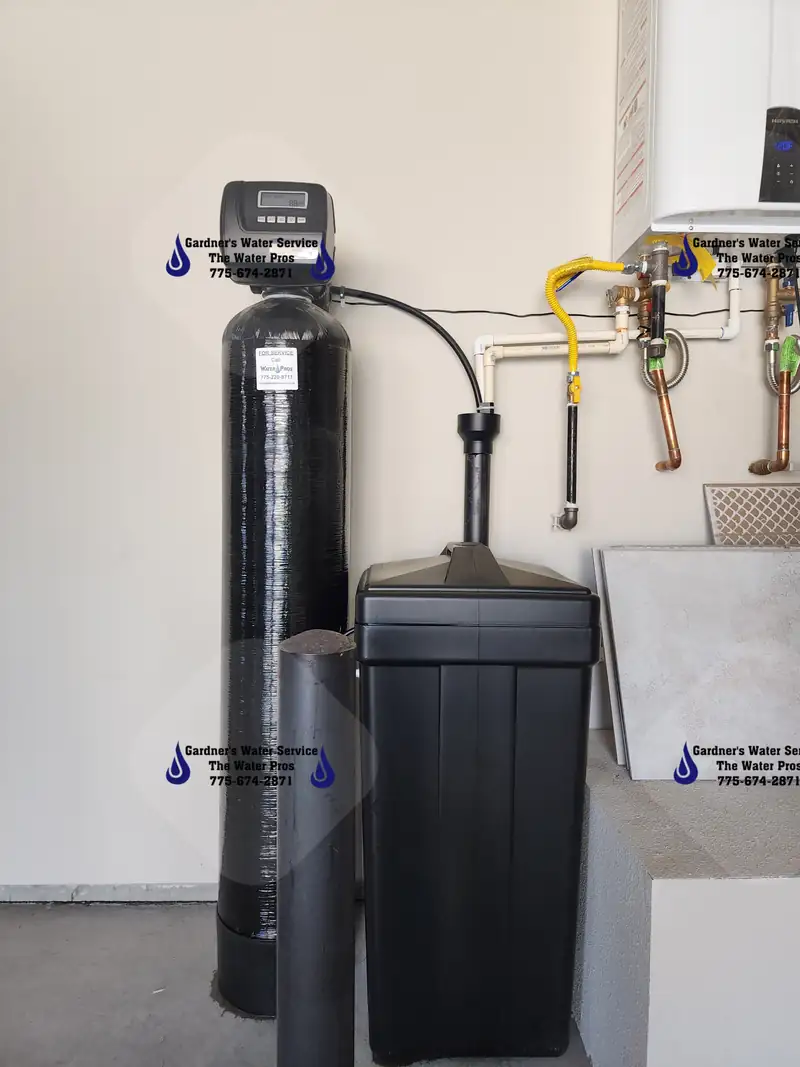
If your test shows moderately hard water, you may decide the spots are a cleaning chore and nothing more. When it reaches the hard or very hard range, a water softener pays off in cleaner glass, easier cleanup, soap that lathers and less scale in the water heater and appliances. Sizing comes from the hardness number and how much water your household uses, which is why we measure rather than guess.
A softener is not the answer to every spot. If the stains are orange, green or black, the cause is something other than hardness, and the water quality problems pages sort those out. Our water softener page explains how the equipment works, and the do I need a water softener guide walks through the decision.
Testing Hardness for Free
Free local basic testing includes hardness, iron and pH, and you do not have to be an existing customer. Bring a clean sample or arrange a visit through water testing, and we will tell you your number in grains per gallon and what it means for your plumbing. If you already own a softener that is leaving spots, we service most water treatment equipment, even systems we did not install. A worn resin bed, an empty brine tank or a settings problem is often the reason a softener stops keeping up.
White Spots and Scale: Questions
Why do I get white spots on dishes even with a dishwasher?
Hard water leaves minerals behind as it dries. Rinse aids help, but the lasting fix is softening the water that feeds the dishwasher.
What is the difference between spots and scale?
Spots are the film left when a drop dries. Scale is the thicker crust that builds inside kettles, pipes and water heaters, especially when the water is heated.
How many grains per gallon count as hard?
On the USGS scale, hard starts at 121 milligrams per liter, which is about 7 grains per gallon by our conversion, and very hard is over 180 milligrams per liter, about 10.5 grains.
Is hard water bad for you?
No. Hardness affects cleaning and equipment rather than health. If you have questions about what else is in your water, a certified lab test is how to know.
Can I get my hardness tested without being a customer?
Yes. Free local basic testing includes hardness, iron and pH, and you do not have to be an existing customer.
Sources (5)
- U.S. Geological Survey: usgs.gov/special-topics/water-science-school/science/hardness-water (checked November 2026)
- Truckee Meadows Water Authority: TMWA neighborhood water quality lookup, sampling Q4 2025 - Q3 2026 (checked November 2026)
- Lyon County: Lyon County Utilities, Dayton Valley water system 2023 CCR (latest posted) (checked November 2026)
- Town of Minden: Town of Minden CCR covering calendar 2025 (checked November 2026)
- Carson City: Carson City 2026 Water Quality Report (2025 data) - loads in a browser only (403 to scripts) (checked November 2026)
Offering you the quality Water Treatment Services you deserve!
Free local basic testing to include hardness, iron & pH. Service on most water treatment systems, even ones we did not install.
or call 775-674-2871
★★★★★ 4.9 on Google from 55 reviews
Monday - Friday - 8am to 4:30pm