
Well Water in Washoe County
Thousands of Washoe County homes drink from private wells, and Northern Nevada Public Health says its office does not oversee or regulate domestic well water quality, so testing is up to the owner. Water Pros offers free local basic testing for hardness, iron and pH, and we help well owners choose lab tests and treatment.
Key points
- The Truckee Meadows Water Authority counted 5,542 domestic wells in its basins through 2015.
- Renown reported in 2020 that about 41,000 people in Washoe and Churchill Counties rely on private wells.
- Northern Nevada Public Health handles well permits and records but does not oversee water quality.
- A free workshop for private well owners was held with RCAC in April 2025.
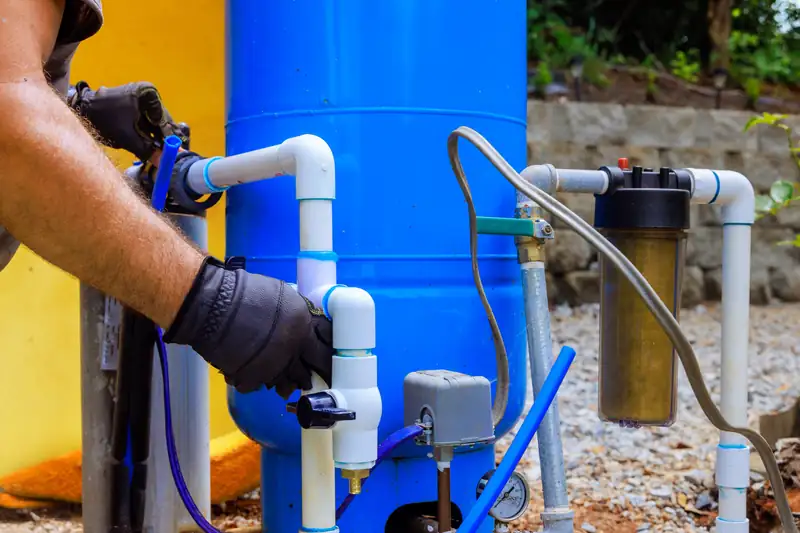
From the Truckee Meadows to Spanish Springs, Lemmon Valley and Cold Springs, a lot of Washoe County sits on private wells. This guide shows where those wells are, what is known about them and what a well owner can do.
How many private wells are in Washoe County?
A 2015 report to the Truckee Meadows Water Authority (TMWA) board on domestic well appropriations counted 5,542 domestic wells in the basins it covered. We found no more recent countywide count, so the table below shows that 2015 report by basin.
Renown Health reported in 2020 that about 41,000 people in Washoe and Churchill Counties rely on private well water. That is a large share of the region, and each of those households is responsible for its own testing.
| Basin | Domestic wells to 2015 |
|---|---|
| Truckee Meadows | 1,472 |
| East Lemmon Valley | 1,372 |
| Pleasant Valley | 817 |
| West Lemmon Valley | 725 |
| Truckee Canyon | 527 |
| Spanish Springs | 410 |
| Cold Springs | 219 |
Source: TMWA Board of Directors report on Nevada domestic wells and appropriations, June 2015. The two Lemmon Valley basins together make up the North Valleys group of 2,097 wells in that report.
Who is responsible for well water quality here?
You are. Northern Nevada Public Health, formerly the Washoe County Health District, runs the Domestic Well Program for permits and records. Its page states: "Our office does not oversee or regulate domestic well water quality in Washoe County." Nevada's Bureau of Safe Drinking Water also does not regulate private wells.
Because nobody monitors a private well for you, a test is the only way to know. Arsenic, nitrate and uranium have no taste, color or smell. Our guide to how to test well water in Nevada explains which lab panel to request and how to collect the sample.
Where can well owners get free local help?
Northern Nevada Public Health and the Rural Community Assistance Corporation (RCAC) held a free workshop titled "You Own a Private Well, Now What?" on April 23, 2025. It is a good starting point for new owners, and the county's Washoe Life news page announced it.
For the water itself, we offer free local basic testing to include hardness, iron and pH. You do not have to be an existing customer. It will not replace a certified lab report for the health items, but it often explains the spots, stains and scale you see around the house, and it tells you which questions to ask the lab.
What should a Washoe County well owner test for?
Start with a Routine Domestic Panel from a Nevada-certified lab, then ask about arsenic, uranium and radioactivity if they are not included. Arsenic is the item that deserves attention across Northern Nevada: a 2022 Desert Research Institute study of 174 domestic wells found 22 percent above the federal limit of 10 micrograms per liter. Nitrate is another one to watch near older neighborhoods on septic systems; a 1996 USGS study found nitrate above standards in several Lemmon Valley and Golden Valley wells.
Between lab panels, test hardness, iron and pH whenever something changes. UNR Extension suggests yearly checks of nitrate, pH, TDS and total coliform bacteria, and a broad panel every 5 to 10 years. We recommend a full analysis every 3 to 5 years, because aquifers and ground water shift.
- Arsenic, uranium and radioactivity through a certified lab
- Nitrate and bacteria each year
- Hardness, iron and pH for everyday water quality
- TDS, sulfate and manganese if the water tastes or stains oddly
How do Washoe County wells get treated?
The treatment follows the test. Hard water is handled by a water softener. Iron and manganese call for an iron filter or manganese filter. A rotten-egg odor points to sulfur filtration. Bacteria can be handled with UV or chlorine injection, and health items such as arsenic and nitrate are commonly treated with a point-of-use reverse osmosis system at the kitchen tap or a dedicated filter.
Whole-house or kitchen tap is a real decision with a real tradeoff, and our point-of-use vs. whole-house guide lays it out. For a bigger picture of how these pieces combine, see our page on well water treatment.
What Water Pros does for Washoe County well owners
We follow the same plain approach everywhere: test, then treat. We offer free local basic testing, help you read the lab report, design and install the system that matches the results, and keep it running with maintenance plans, filter replacement and service. We work on homes and businesses, on city water and on wells, and on equipment even if it was not installed by us.
The flat-rate service call fee carries no hourly labor charges and no fuel surcharges, and we will return at no additional charge if the work needs a second visit. Call 775-674-2871 or use the scheduling page. Our Reno page covers the city water side of the valley.
Sources (7)
- Truckee Meadows Water Authority: TMWA Board report on domestic wells (Washoe County Assessor data), 6/17/2015 (checked November 2026)
- Northern Nevada Public Health: nnph.org/programs-and-services/environmental-health/land-development/well-program.php (checked November 2026)
- Washoe County: washoelife.washoecounty.gov/?p=23632 (checked November 2026)
- Renown Health: renown.org/about/newsroom/could-well-water-unlock-health-insights (checked November 2026)
- U.S. Geological Survey: usgs.gov/centers/nevada-water-science-center/science/arsenic-nevada-groundwater (checked November 2026)
- Nevada Division of Environmental Protection: ndep.nv.gov/uploads/water-labcert-dwtesting-docs/WellWaterTesting.pdf (checked November 2026)
- Phys.org: phys.org/news/2022-10-elevated-arsenic-metals-nevada-private.html (checked November 2026)