

Water Softener Using Too Much Salt
A softener that goes through salt faster than it used to usually has a settings issue, a regeneration schedule that fires more often than it needs to, a brine tank problem or harder water than before. A service visit that checks the settings, regeneration cycles and brine draw finds the cause.
Key points
- Timer and metered regeneration use salt differently.
- Settings that do not match your hardness are a common cause.
- A change in water, such as new iron or a seasonal swing, can raise salt use.
- We confirm regeneration cycles and proper settings on every maintenance visit.
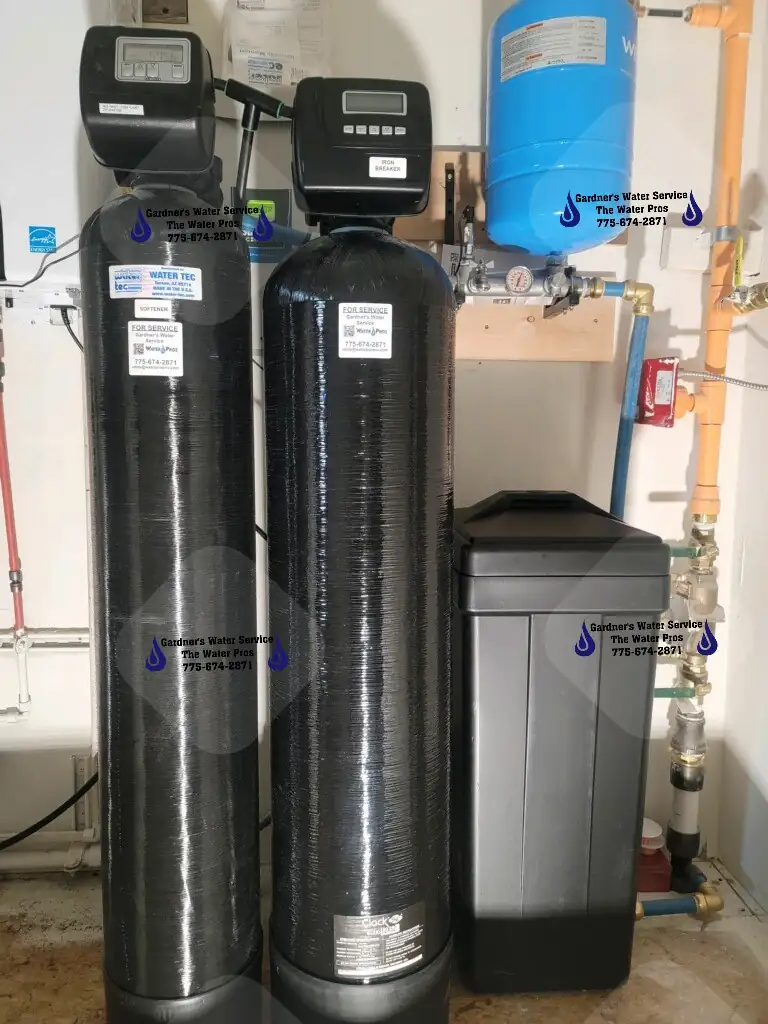
First, is it really too much?
Before troubleshooting, compare against your own history. Salt use rises with hardness and with the number of gallons the household uses, so a new baby, guests for the summer or a seasonal swing in your water can all move the number. A jump you cannot explain, or a bag that vanishes in a week, is what deserves a look.
Write down when you add salt and how much. Two or three entries tell us whether the change is gradual or sudden, which narrows the list of causes.
Timer or metered: how regeneration is triggered
A softener decides when to regenerate in one of two ways. A timer unit regenerates on a preset schedule whether or not the resin needs it; Penn State Extension notes this wastes more water and salt. A metered (demand-control) unit regenerates after a set number of gallons has been softened, which Penn State Extension calls convenient when water use varies.
Both can be set up well, but they behave differently when water use changes. A timer set for a larger household keeps regenerating on the same schedule after the kids move out. A meter follows actual use, so salt use follows the household. If your system is on a timer and your habits have changed, the schedule is the first thing to revisit.
Common causes and what to check
Work through this list from the top:
| Possible cause | What to look for | Who fixes it |
|---|---|---|
| Settings out of step with your hardness | Regeneration fires more often than your numbers call for | Adjusted on the control head by a service visit |
| Timer schedule that no longer fits | Household size or water use has changed | Reset to match, or review whether metered control suits you |
| Harder water than before | Spots return sooner; a hardness test reads higher | Test, then adjust settings or capacity |
| Iron in the water | Orange staining; extra load on the resin | Test, then consider an iron filter |
| Salt bridge in the brine tank | A hard crust on top with a gap below | Break it up; a service visit finds out why it formed |
| Brine draw or refill problem | Tank level odd, water standing high | Service visit checks the draw and refill |
A salt bridge and a few easy checks
Sometimes the salt hardens into a crust across the top of the tank, often called a salt bridge, with an empty space beneath. The tank looks full, but the water below may not be touching salt, so the brine can come out weak. If you see a crust, break it up gently, taking care not to damage the tank, and tell us.
Also check that the salt level stays above the water line without overfilling, and see our guide on how often to add salt for a monthly routine. Salt type matters less than people expect; the salt types guide explains the options.
What to do while you wait for a visit
Keep the lid closed except for checking, add salt as your softener's manual directs, and record the dates. Do not change settings on the control head unless you have the manual in hand, since a wrong change can make matters worse.
If the spotting on glass has come back or soap scum is building, run a hardness check at the tap. That tells us whether the water is getting through hard, which matters more than how much salt the tank holds.
What Water Pros does about it
Our maintenance visit confirms media movement and regeneration cycles and proper settings, checks the brine draw and refill, and covers sanitizing of the salt tank. We service and repair most water treatment equipment, even if it was not installed by us, and our water softener service page describes what a visit includes.
It is a flat-rate service call fee with no hourly labor charges and no fuel surcharges, and if the issue is not resolved during the first visit, we will return at no additional charge. We begin with free local basic testing so the settings match your water. See also water softeners and our maintenance plans.
Sources (5)
- waterprosnv.com: Water Pros: Water Softeners (checked November 2026)
- waterprosnv.com: Water Pros: System Maintenance (checked November 2026)
- waterprosnv.com: Water Pros: Service & Repair (checked November 2026)
- Penn State Extension: extension.psu.edu/water-softening (checked November 2026)
- health.state.mn.us: health.state.mn.us/communities/environment/water/factsheet/softening.html (checked November 2026)