

Water Softener Salt: Sodium vs. Potassium
Your softener swaps hardness minerals for sodium, or for potassium if you fill the brine tank with potassium chloride. Both are used the same way, so the choice comes down to your preference, any sodium concern in the household and what your softener's manufacturer recommends.
Key points
- Softeners exchange calcium and magnesium for sodium ions, or potassium ions with potassium chloride.
- A sodium softener adds some sodium; potassium chloride is the alternative the Minnesota Department of Health names.
- Salt comes in several forms, and the right one depends on your tank and your habits.
- If you switch to potassium, we can check the settings during a service visit.
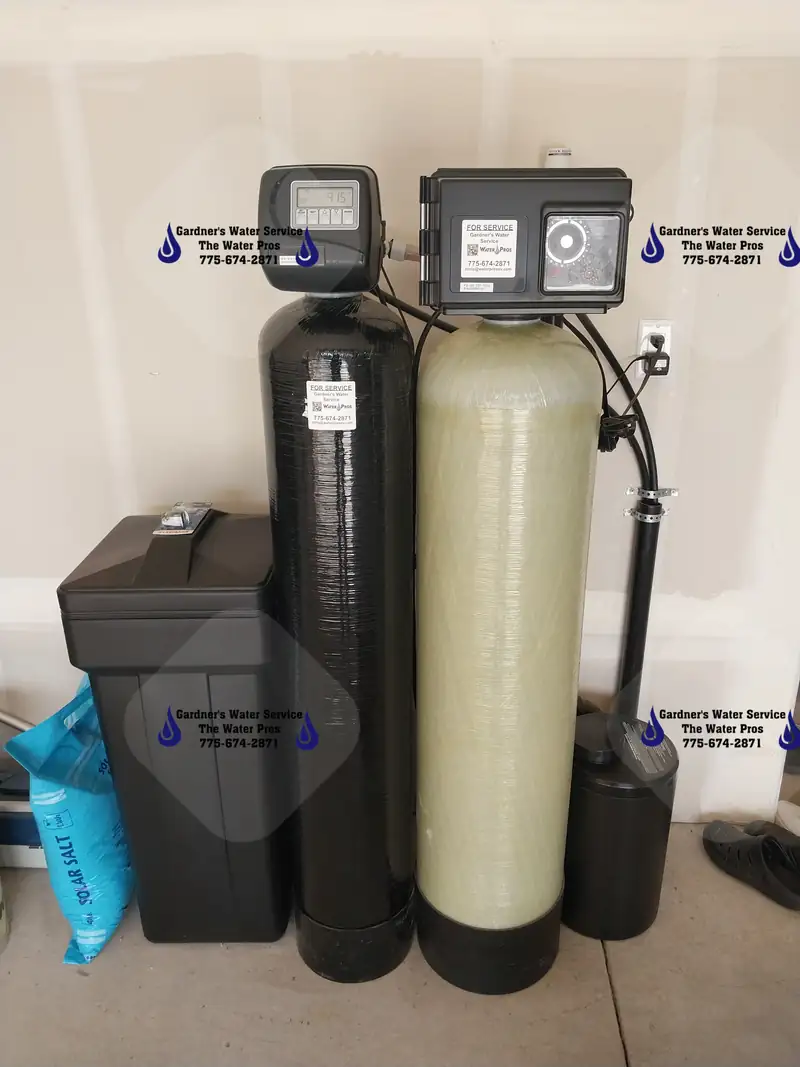
What does the salt actually do?
A softener holds tiny resin beads that attract calcium and magnesium as water passes through. When the beads fill up, the softener flushes them with brine, a strong salt solution made in the brine tank, and the beads reload with sodium or potassium ions. That regeneration is why a softener needs salt added on a regular basis.
The salt never goes into your drinking glass as a seasoning. It does its work on the resin, and the rinse carries the hardness minerals down the drain. What reaches your taps is softened water carrying some sodium or potassium in place of the hardness. The Minnesota Department of Health notes that a softener using sodium chloride increases the sodium in the water you drink at home.
Because this exchange happens inside the softener, the salt type you pick is mostly a matter of household preference. What matters most is that the brine tank always has enough salt to make a strong brine.
Sodium chloride or potassium chloride?
The two are used the same way, so you can think of them as two fuel grades for the same machine. Here is how households usually weigh them:
| Question | Sodium chloride (common salt) | Potassium chloride |
|---|---|---|
| What goes into the water? | Some sodium | Some potassium |
| Where it fits | The standard choice for salt softeners | Chosen by households who prefer potassium |
| Works with the same softener? | Yes | Yes, with the settings checked |
| Cost | Compare bag prices at the store | Compare bag prices at the store |
The Minnesota Department of Health suggests that anyone with a history of high blood pressure ask a doctor about drinking softened water, and names two ways to cut the sodium: keep an unsoftened tap for cooking and drinking, or regenerate with potassium chloride.
Which form of salt should I buy?
Salt for softeners is sold in more than one form, and the bag label says what it is meant for. The Minnesota Department of Health's advice is simple: fill the softener with sodium or potassium chloride following the manufacturer's recommendations. Buy salt sold for water softeners rather than salt meant for other uses.
Whatever form you buy, keep the tank from filling with a hard crust at the top and from sitting nearly empty. Both situations are easy to spot during a service visit, and both are worth a look when salt use changes. Our guide on how often to add salt covers the routine.
Switching from sodium to potassium
If you decide to change, empty the tank of the old salt as far as is practical, refill with the new type and let the softener regenerate on its normal schedule. A hardness test at the tap afterward tells you how the system is doing.
Because the brine draw and refill are part of how a softener works, we check them as part of our maintenance. After a change in salt type, it is a sensible moment to have the settings looked at.
A few salt habits that help
Store bags dry and off the floor of the garage or utility room, and add salt in amounts that let you still see the level in the tank.
If you ever add something other than salt to the tank, such as a cleaner meant for resin, follow the product directions closely and mention it to us at your next visit. Knowing what has gone into the tank helps us read what we find there.
What Water Pros does about it
We start with free local basic testing to include hardness, iron and pH, because hardness drives how much salt a household uses. At each maintenance visit we check the brine tank draw and refill and sanitize the salt tank, so the part of your softener that works hardest stays in good order.
Our water softener service covers most systems, even if they were not installed by us, and our water softener page explains what we install. Call us with any question about the salt your system should be using; we are happy to look at your equipment and tell you.
Sources (5)
- waterprosnv.com: Water Pros: What Treatments are Right for Me? (checked November 2026)
- waterprosnv.com: Water Pros: System Maintenance (checked November 2026)
- U.S. Geological Survey: usgs.gov/special-topics/water-science-school/science/hardness-water (checked November 2026)
- health.state.mn.us: health.state.mn.us/communities/environment/water/factsheet/softening.html (checked November 2026)
- Penn State Extension: extension.psu.edu/water-softening (checked November 2026)