

Chlorine Injection Systems
A chlorine injection system feeds a small, measured dose of chlorine solution into well water so it can treat iron, a rotten-egg smell and bacteria before the water reaches your home. Water Pros services these systems and checks suction, injection and dosing so the dose stays steady and accurate.
Chlorine injection is a well-water tool. It is chosen from a test, built with a contact tank and a filter behind it, and kept on a service schedule, which is why this page covers the whole chain rather than the pump alone.
What Chlorine Injection Does (Iron, Sulfur Smell, Bacteria)
A small feed pump draws chlorine solution from a tank and injects it into the water line as the well pump runs. Chlorine is a strong oxidizer, which makes it useful for three common well problems at once.
For iron, chlorine converts the dissolved metal into solid particles that a filter can catch. For hydrogen sulfide, the gas behind the rotten-egg smell, it oxidizes the gas so the smell goes away. For bacteria, it disinfects. The U.S. EPA lists chlorine, ozone and ultraviolet light as the options for disinfecting a private well, and recommends testing for coliform bacteria every year. The University of Nevada, Reno Cooperative Extension well-testing guide, published through the state, also advises a yearly total coliform test.
- Iron: oxidized into particles and filtered out
- Sulfur smell: hydrogen sulfide oxidized so the odor is gone
- Bacteria: disinfected, with a yearly coliform test to confirm
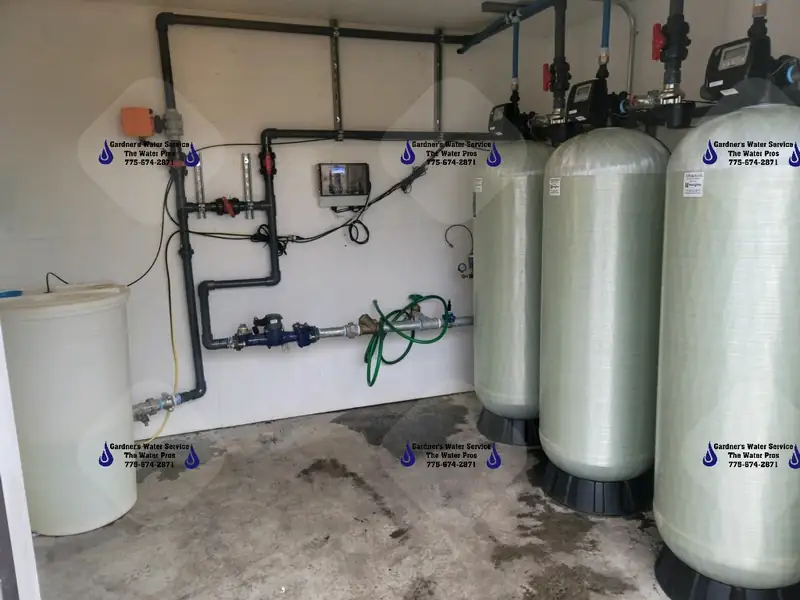
Contact Tank and Carbon After
Chlorine needs time to work. Penn State Extension notes that chlorination for hydrogen sulfide needs contact time, with about 20 minutes cited, before the water reaches a filter. That is why a chlorine injection system includes a contact tank: a vessel that holds the water long enough for the chlorine to do its job.
After the contact tank comes the filter. A media filter catches the particles that chlorine creates from iron, and a carbon filter takes out the leftover chlorine so the water at your tap does not smell or taste like it. The full chain is injection, contact tank, filter, carbon. If the smell is your main complaint, our sulfur filtration page compares chlorine with the other approaches, and bacteria filtration covers disinfection and UV.
- The well pump runs and the feed pump injects a measured dose of chlorine solution.
- The water holds in the contact tank so the chlorine has time to work.
- A media filter catches the iron and other particles that formed.
- A carbon filter removes leftover chlorine before the water enters the house.
Service Checks
A chlorine injection system depends on a steady dose, so the visit is built around the pump and the feed line. Too little chlorine and the smell or the iron returns; too much and you taste it at the tap. Our service checklist covers the points that keep the dose right.
- Inspect the system for leaks
- Confirm proper suction and injection of the chlorine solution
- Ensure consistent and accurate chemical dosing
- Check the contact tank, the filter and the carbon stage behind it
We include these checks in our well filter system service, and we work on most water treatment systems even if they were not installed by us.
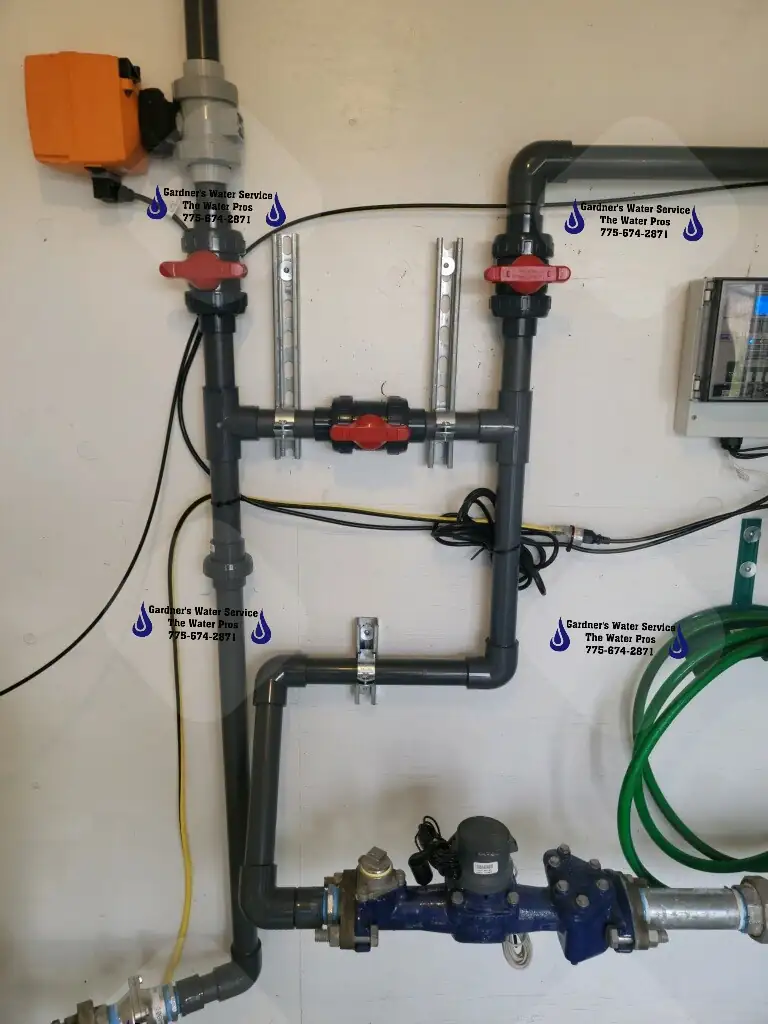
Safety: Water Pros Handles the Chemical
The solution in the feed tank is a concentrated chemical, and handling it is our job. We mix, refill and adjust it, we flush lines when needed and we leave the system running at the setting your water test calls for. Your part is simple: call us when the tank looks low or the water changes.
Sizing starts with the test. A free local basic test gives hardness, iron and pH, and a lab analysis adds bacteria and the other well items. We recommend a coliform test every year for a private well, and a re-test after any change to the system. That is the test, then treat approach: we set the dose from the results and check it again afterward.
FAQ
Here are the questions well owners ask us about chlorine injection.
Chlorine Injection Systems: Questions
What does a chlorine injection system treat?
It treats iron, hydrogen sulfide (the rotten-egg smell) and bacteria in private well water. A filter and a carbon stage after the injection finish the job.
Why does the system have a contact tank?
Chlorine needs time to react. Penn State Extension cites about 20 minutes of contact for hydrogen sulfide before filtration, and the contact tank provides that time.
Will my water taste like chlorine?
A carbon filter after the contact tank removes the leftover chlorine. If you can taste it, the dose or the carbon stage needs a service check.
How often should a well be tested for bacteria?
Test for total coliform every year, according to the University of Nevada Cooperative Extension guidance and the EPA. We also suggest a test after any repair or change to the well or the system.
What do you check on a service visit?
We inspect the system for leaks, confirm proper suction and injection of the chlorine solution and ensure consistent, accurate dosing.
Do you service chlorine systems someone else installed?
Yes. We service most water treatment equipment, even if it was not installed by us.
Sources (3)
- Penn State Extension: extension.psu.edu/hydrogen-sulfide-rotten-egg-odor-in-water-wells (checked November 2026)
- U.S. EPA: epa.gov/privatewells (checked November 2026)
- Nevada Division of Environmental Protection: ndep.nv.gov/uploads/water-labcert-dwtesting-docs/WellWaterTesting.pdf (checked November 2026)
Offering you the quality Water Treatment Services you deserve!
Free local basic testing to include hardness, iron & pH. Service on most water treatment systems, even ones we did not install.
or call 775-674-2871
★★★★★ 4.9 on Google from 55 reviews
Monday - Friday - 8am to 4:30pm