

Iron Bacteria in Well Water
Iron bacteria are naturally occurring microbes that feed on iron in well water and leave rust-colored slime, tea-colored water and a swampy or musty odor. Treatment starts with a test and usually combines shock chlorination of the well with an iron filter, and we handle the filtration, chlorine injection and service.
Key points
- Look for slime in toilet tanks, orange or brown gel at fixtures, and a musty or swampy smell.
- Free basic testing for iron shows whether iron is present; a lab confirms whether bacteria are involved.
- Shock chlorination followed by an iron filter is the standard approach described by Penn State Extension and the EPA.
- Retention tanks are normally used for coliform or E. coli, and are generally not the answer for iron bacteria.
Orange water is usually dissolved iron. But when the water also leaves a slippery slime behind, or the color keeps coming back after a filter was installed, bacteria that live on iron may be part of the picture. The two problems overlap, and the fix works best when you know which one you have.
What are the signs of iron bacteria?
Iron bacteria occur naturally in soil and groundwater. They are mainly a nuisance rather than the kind of bacteria that call for a coliform response, but they clog pipes, foul fixtures and make water unpleasant to use. Penn State Extension and the EPA's private well guidance describe the same clues homeowners notice:
- Rust-colored or tea-colored water, often worse after the water sits
- Orange, brown or gray slime in toilet tanks and around faucet aerators
- A musty, swampy or cucumber-like smell
- Stains on fixtures and laundry that return soon after cleaning
- Filters, softeners or screens that foul faster than expected
How is it different from dissolved iron?
Dissolved iron comes straight from the rock. The water is clear out of the tap, then turns orange as it meets air. Iron bacteria are living colonies that form a gel or film inside the well, pump and plumbing, so you see slime and sheen and can get color even when a lab finds modest iron.
A basic test is the right first step. Our free local basic testing covers hardness, iron and pH, and it shows how much iron the water carries. If the iron reading is low but the slime is obvious, or the problem returns after an iron filter was installed, the next step is a lab test for iron bacteria. See our guide on testing well water in Nevada for which lab to ask.
| What you see | More likely dissolved iron | More likely iron bacteria |
|---|---|---|
| Water out of the tap | Clear, then turns orange | Cloudy or tea-colored right away |
| Slime in toilet tank | Rare | Common |
| Smell | Little or none | Musty, swampy |
| Returns after a filter | Seldom | Often |
How are iron bacteria treated?
The usual method has two parts. Shock chlorination disinfects the well, pump and piping with a strong chlorine solution that is held in the system and then flushed out. That step is described by Penn State Extension and the EPA for private wells, and it needs to be done carefully so the chlorine reaches the whole system and the discharge is handled responsibly.
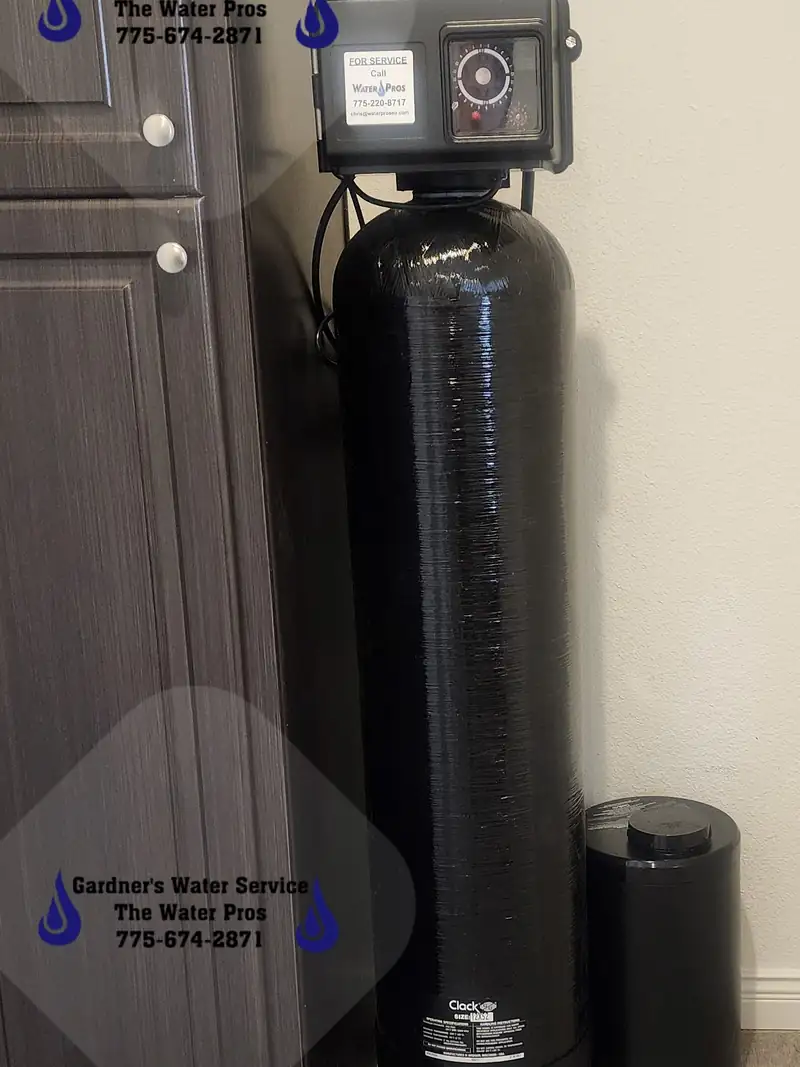
The second part is keeping the problem from coming back by removing iron from the water. An iron filter takes out the dissolved iron that bacteria feed on, and a chlorine injection system can add ongoing disinfection ahead of the filter when the water calls for it.
Where do retention tanks fit?
Some homeowners are told to add a retention tank. In our experience, retention is normally used only when a lab finds E. coli or coliform bacteria, and we are careful about recommending a retention tank for iron bacteria because a tank can become a place where slime builds. We would rather match the treatment to the test result.
Our bacteria filtration page explains how UV and chlorine fit into the picture for coliform, which is a separate question from iron bacteria.
What Water Pros does about iron bacteria
We start with the free local basic test, then recommend a lab test if bacteria are suspected, because lab testing is typically required for well water. From the results we explain whether you need a filter, chlorine injection, a well disinfection, or a combination. You don't have to be an existing customer.
After installation we return for filter replacement and system maintenance on the schedule we set together, and we service iron systems even if they were not installed by us. See well water treatment and system maintenance for what each visit covers.
Sources (3)
- waterprosnv.com: Water Pros: Bacteria Filtration (checked November 2026)
- Penn State Extension: extension.psu.edu/iron-and-manganese-in-private-water-systems (checked November 2026)
- U.S. EPA: epa.gov/privatewells (checked November 2026)